How to Build a Healthy Routine When You’re Busy or Unmotivated
Staying healthy sounds simple, but real life makes it hard. Busy schedules, low motivation, stress, and mental fatigue often stop people from exercising, eating well, or even sleeping properly. If you’ve ever thought, “I’ll start tomorrow”—you’re not alone.
The good news is this: you don’t need motivation or a perfect schedule to build a healthy routine. You need a system that works with your lifestyle, not against it.
This guide will show you how to build a realistic, sustainable health routine—even when you’re busy, tired, or unmotivated.
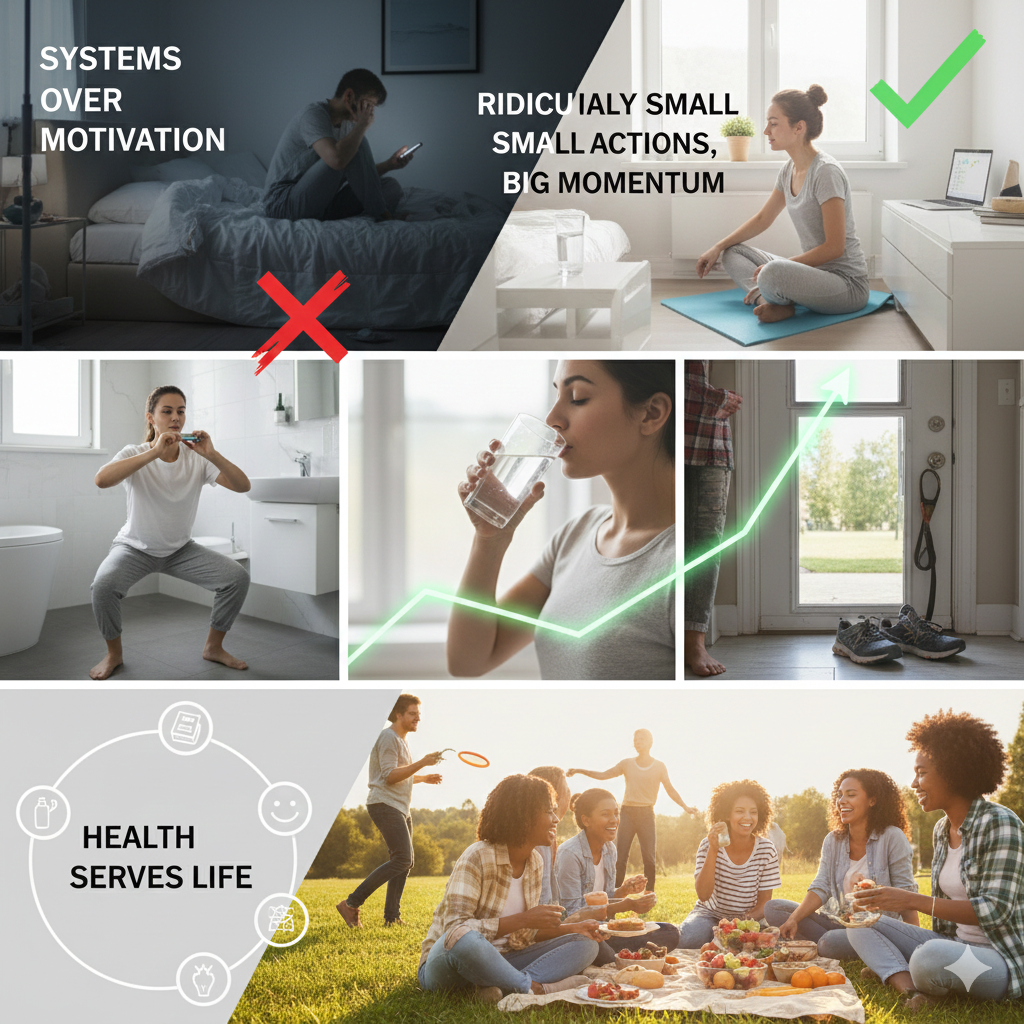
1. Stop Chasing Motivation — Build Systems Instead
Motivation is unreliable. It comes and goes. Healthy people don’t rely on motivation; they rely on habits.
Key mindset shift:
❌ “I’ll do it when I feel motivated”
✅ “I do it because it’s part of my routine”
Small systems beat big goals every time.
Example:
Instead of: “I’ll work out 1 hour daily”
Do this: “I’ll stretch for 3 minutes every morning”
Once the system exists, motivation becomes optional.
2. Start Ridiculously Small (This Is Not Weakness)
When energy is low, small actions keep momentum alive.
Try these minimum-effort habits:
-5 squats before showering
-1 glass of water after waking up
-5-minute walk outside
-One healthy meal per day (not all meals)
The goal is consistency, not intensity.
If something feels too easy, that’s good. It means you’ll actually do it.
3. Attach Health Habits to Existing Routines
Busy people succeed when they stack habits.
Habit stacking examples:
-After brushing teeth → stretch for 2 minutes
-After lunch → 5-minute walk
-While watching YouTube → light stretching
-Before bed → prepare tomorrow’s water bottle
You don’t need extra time. You need better placement.
4. Lower the Bar on “Healthy”
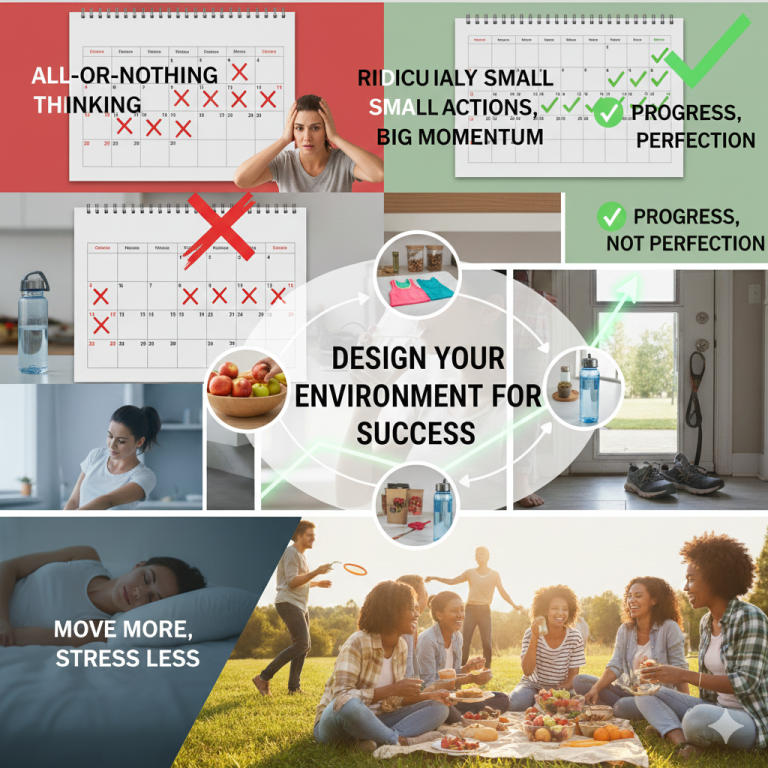
All-or-nothing thinking kills routines.
Healthy does not mean:
-Perfect diet
-Daily workouts
-Zero junk food
Healthy does mean:
-Better than yesterday
-One good decision at a time
Progress beats perfection. Always.
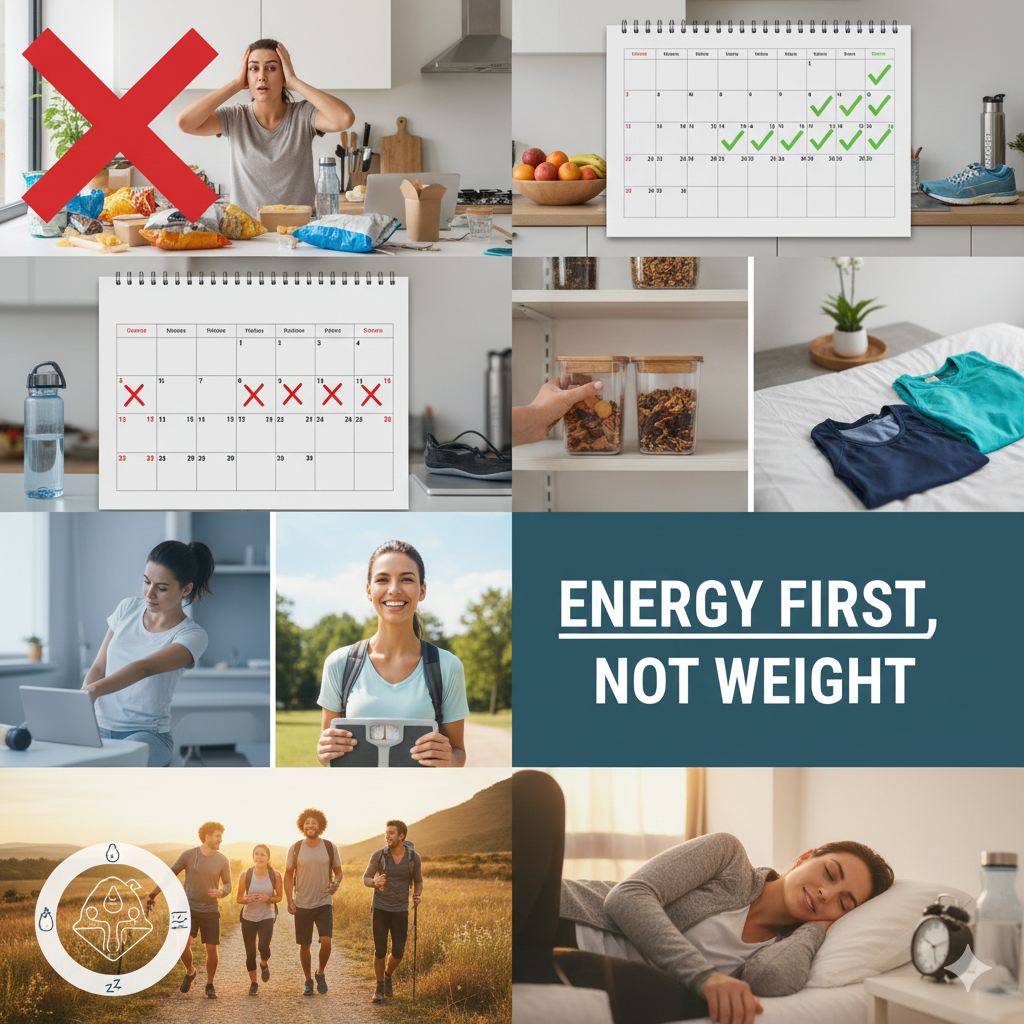
5. Focus on Energy First, Not Weight or Appearance
When motivation is low, focus on how health improves daily energy, not looks.
High-energy habits include:
-Better sleep timing
-Proper hydration
-Balanced breakfast
-Light daily movement
When energy improves, everything else becomes easier.
6. Design Your Environment for Success
Your environment shapes your behavior more than willpower.
Simple environment upgrades:
-Keep healthy snacks visible
-Place workout clothes where you see them
-Remove junk food from easy reach
-Keep water on your desk
Make healthy choices the default, not the struggle.
7. Accept Low-Energy Days (Don’t Quit on Them)
Low-energy days are normal. Quitting is optional.
On bad days, switch to maintenance mode:
-Stretch instead of workout
-Eat one nutritious meal
-Sleep earlier
Maintaining the habit is more important than performance.
8. Use the “Never Miss Twice” Rule
Missing one day is human. Missing two days creates a pattern.
Rule:
-Never miss a healthy habit two days in a row.
This rule alone prevents long-term failure.
9. Track Wins, Not Failures
Instead of tracking what you didn’t do, track what you did do.
Examples:
-Drank water ✔️
-Walked 5 minutes ✔️
-Slept earlier ✔️
Momentum grows when you see progress.
10. Make Health Serve Your Life — Not Control It
Health routines should support your goals, not stress you out.
The best routine is:
-Flexible
-Forgiving
-Sustainable
If your routine works only on perfect days, it will fail.
Final Thoughts
You don’t need more motivation. You need simpler habits, smaller steps, and smarter systems.
Start today with one tiny action. Tomorrow, repeat it. That’s how real health is built.
Want More Simple Health Tips?
If you want easy, realistic ways to improve energy, sleep, and daily health—keep following this blog. Health should feel achievable, not overwhelming. And reply to me if you have anything to ask.